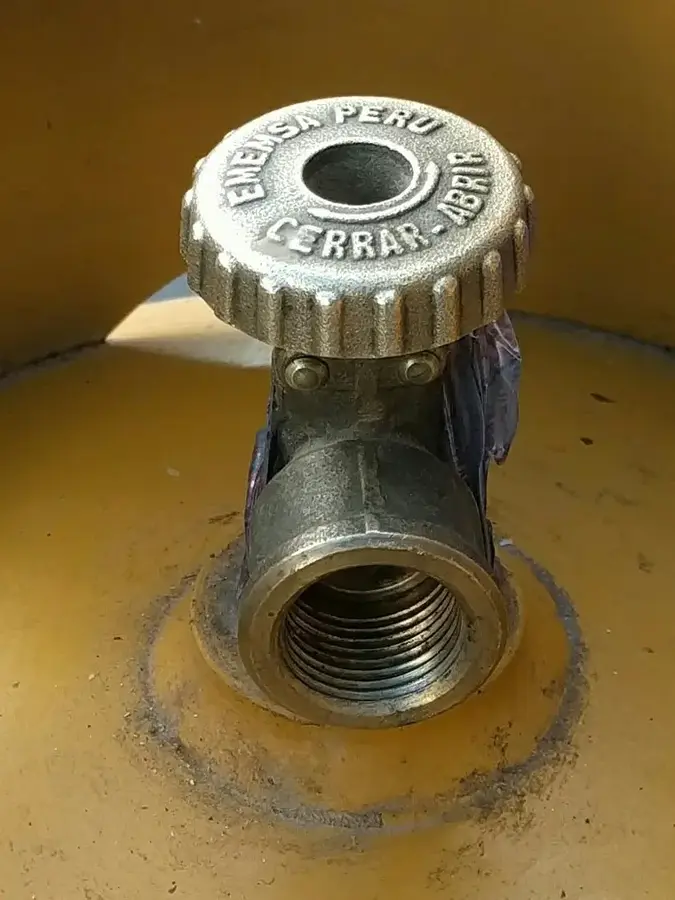
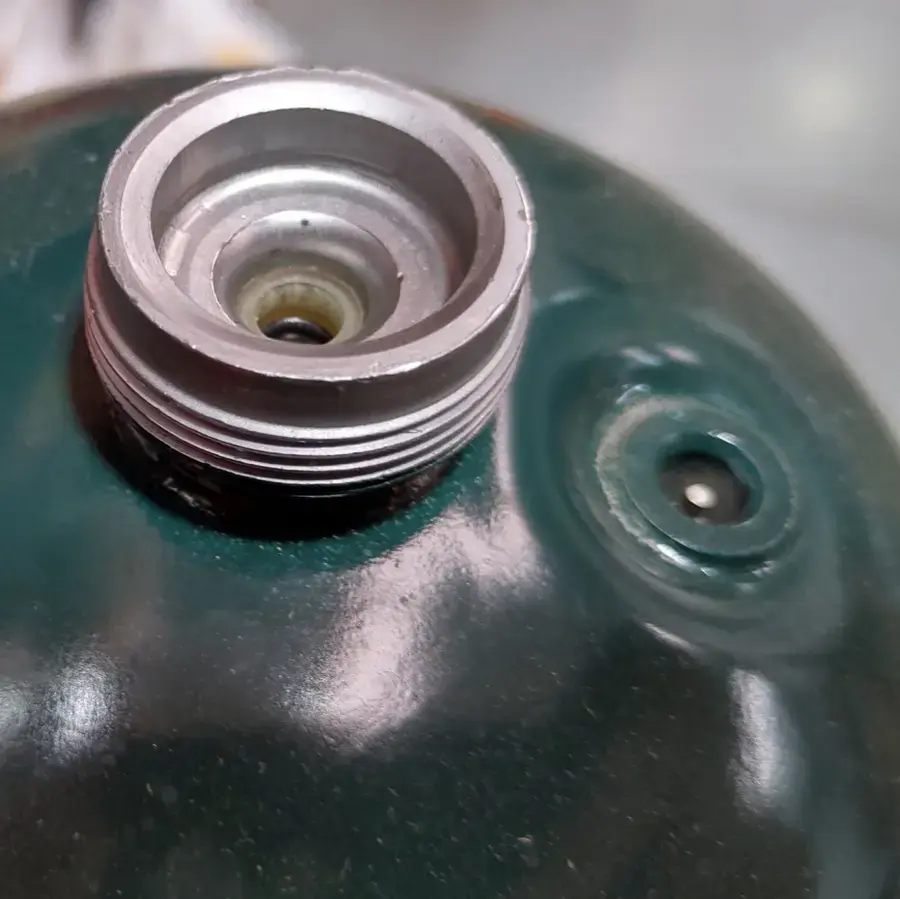
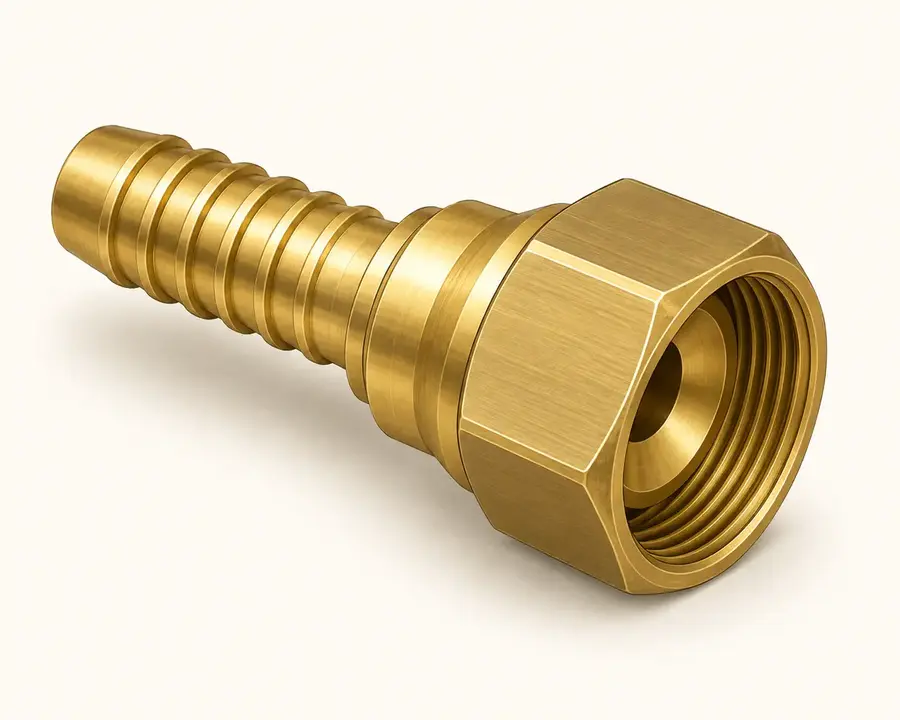
Identify a connectorStart with the picture. Finish with the specification.
The photographs and technical illustrations below can help you put a name to the connector in front of you. Each illustration is based on a named manufacturer part. It is not a measured drawing, so you must still confirm the size and specification in the manual or parts diagram.
A visual match is not enough.A picture cannot confirm thread size, gas pressure, flow rating, or fuel approval. Never force a connector or improvise an adapter. PERC safety guidance ↗ Common grill-hose connectorsCompare seven connector types.
Look at the general shape and sealing surface, then check the markings and exact specification in your appliance documentation.
Common modern 20 lb propane-cylinder connectionType 1 / QCC1
Large hand-tightening nut that threads over the outside of the tank valve.
A familiar tank end does not establish the required regulator pressure or appliance-end fitting. Legacy or specialty propane-cylinder connectionPOL / CGA 510
Metal fitting that screws into the internal tank-valve thread; often tightened with a wrench.
POL uses a fuel-gas left-hand thread. Do not force or adapt it by appearance. Portable appliance connection normally used with a 1 lb cylinder1 in–20 / CGA 600
The 1 lb cylinder valve has a fine external male thread; the appliance or adapter has the mating female connection.
A bulk-cylinder adapter is appropriate only when the appliance manufacturer permits one. Common appliance end on low-pressure LP regulator assemblies3/8 in female flare
Swivel hex nut with an internal flare seat; it seals at the flare, not on pipe threads.
The metal flare seat makes the seal. Confirm the exact size, mating male flare, and documented assembly method. Appliance or hose-end flare connection3/8 in male flare
Protruding cone-shaped sealing nose with straight threads behind it.
Male and female describe the sealing geometry, not simply whether threads are visible. Fixed piping, valves, adapters, and some appliance connectionsNPT pipe thread
Tapered pipe thread that tightens progressively; nominal size cannot be confirmed from a picture.
Flare and NPT connections are not interchangeable. Gas-rated sealing and installation requirements differ. Detachable natural-gas or LP appliance hose connectionGas quick disconnect
Sliding socket collar that receives a matching plug, often in 3/8 in or 1/2 in nominal sizes.
Size, fuel rating, flow capacity, plug profile, and shutoff design must all match; appearance is not enough. Guided hose checkCheck five details before choosing a part.
This guide covers four common connector combinations. It stops on uncertain, adjustable, high-pressure, converted, or nonstandard setups.
Missing a specification?Check the manufacturer information before continuing.
Safety basis: CPSC gas-grill guidance ↗ and PERC propane guidance ↗. Natural-gas supply and fixed quick-disconnect work requires a qualified gas technician; this guide identifies connection families only. Installation label ↗
Your next step will appear here.Answer only from the appliance label, manual, or manufacturer documentation. Choose “I'm not sure” when a detail is unclear.
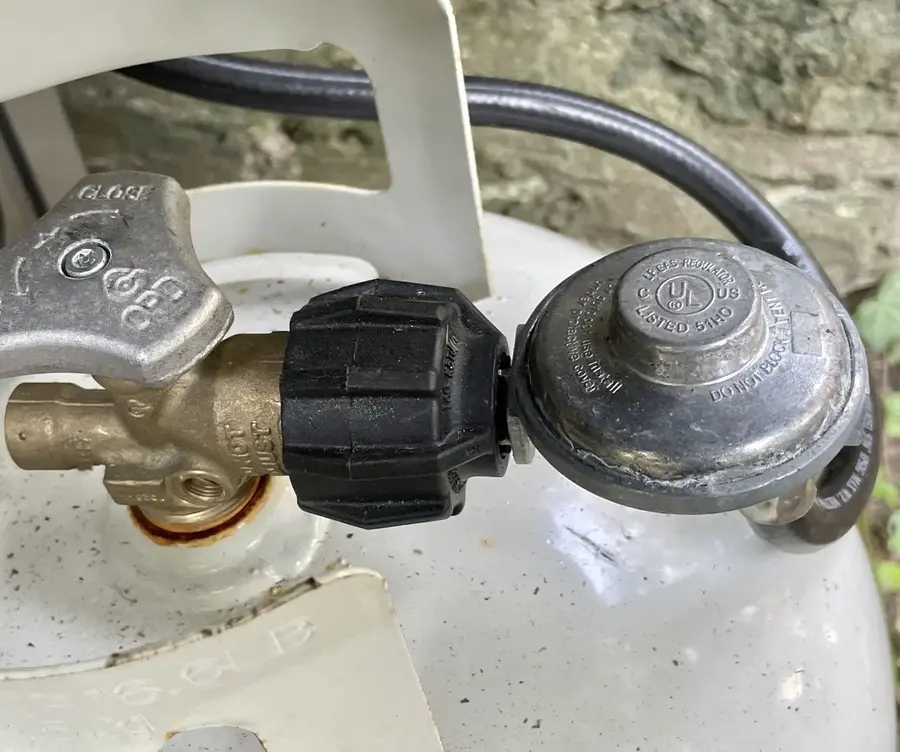 Actual photograph